 IT
IT


Terminali Italia to manage the new Orte intermodal terminal
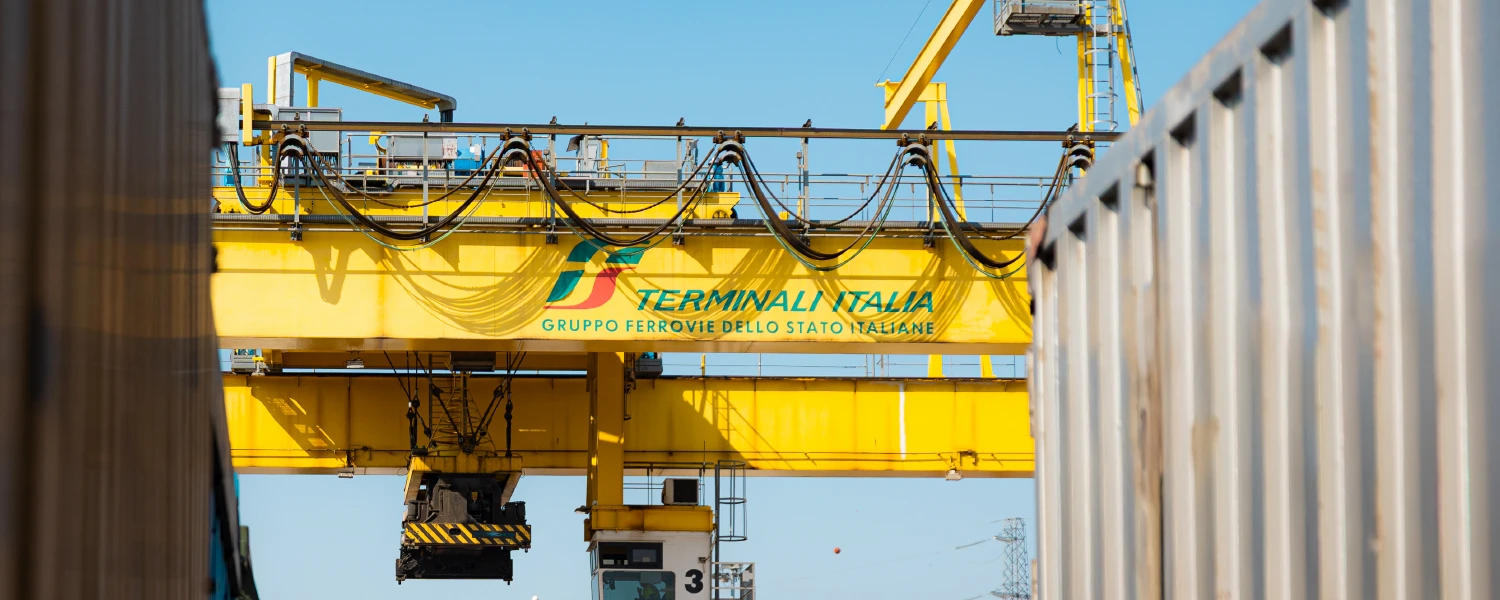
Starting in January 2027, Terminali Italia - a company belonging to FS Logistix - will manage the Orte Intermodal Terminal. This operation is a further step towards strengthening FS Logistix’s integrated service range, and it focuses especially on the development of rail-road intermodality, confirming the strategic role held by rail freight transport in achieving more efficient, competitive and sustainable logistics. With this latest addition, the number of terminals managed by FS Logistix in Europe rises to 23.
Located in a central position along the main national transport routes, the Orte terminal is set to become a key hub for freight traffic between north and south, with potential connections to the Adriatic coast and the main European corridors. The new infrastructure will expand the capacity of FS Logistix’s terminals and services network in Central Italy, providing a facility that can support new national and international railway and intermodal connections.
“The inclusion of the Orte Intermodal Terminal in Terminali Italia’s network is part of a holistic vision to complete Lazio’s strategic infrastructure. This is also a tangible opportunity to strengthen our presence in Central Italy and support businesses in their transition towards more sustainable, intermodal and integrated logistics models - said Sabrina De Filippis, FS Logistix CEO - Our goal is to work alongside the market right from the start, to build new connections and services that meet the region’s production and distribution needs, while highlighting the railways’ role as drivers of competitiveness and sustainability.”
The terminal’s position is one of the main factors in this initiative. It is directly connected to the Orte railway junction, where the Roma-Firenze, Orte-Falconara, and the Scandinavian–Mediterranean Corridor intersect, and is also close to the main road networks, including the A1 Milano-Napoli motorway and the E45/SS675. Its proximity to Rome, the port of Civitavecchia and central Italy’s main manufacturing districts reinforces the terminal’s potential in serving the industrial and distribution sectors.
The terminal has approximately 96,000 square metres of yard space, three tracks for intermodal operations, carry cranes, shunting locomotives and specialised equipment for handling intermodal transport units. The hub was established to serve a broad and diverse logistics and manufacturing catchment area, from distribution logistics and large-scale retail in the Rome area – including as dry port for the Capital - to Terni’s steel industry, Narni’s chemical industry, Civita Castellana’s ceramic industry, and Tuscia’s agri-food sector.